
Laboratory of Redox Biology and Metabolism
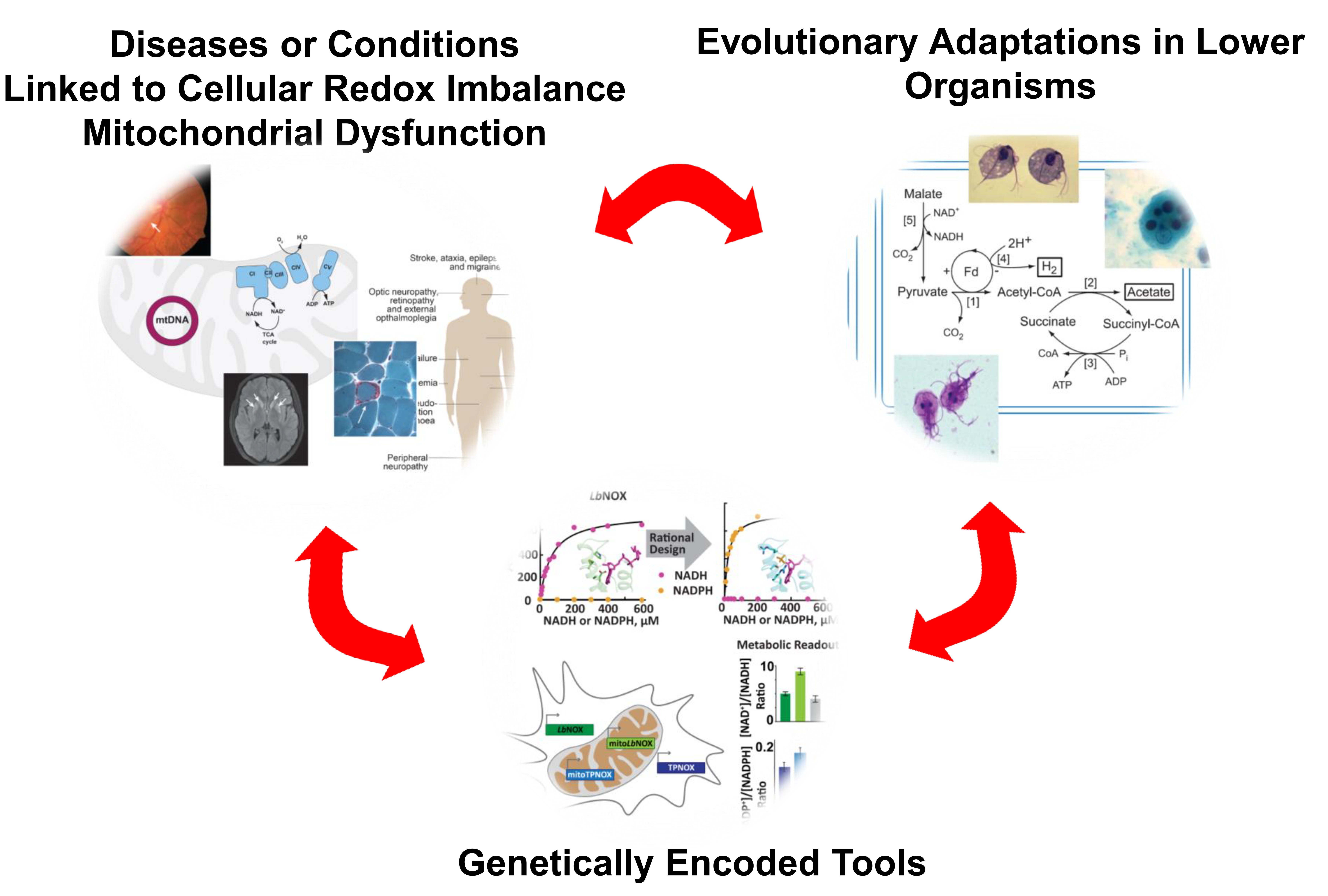
Multiple human diseases and conditions are associated with a perturbed cellular reduction-oxidation (redox) environment. Such pathologies include disorders caused by defects in the mitochondrial electron transport chain (ETC), neurodegeneration, cancer, cardiovascular disease, and aging. However, for most of these conditions, it is not known which specific metabolic or signaling pathway, and which cellular compartment, is the major contributor to the redox imbalance. In order to address this critical challenge, it is necessary to have tools with which key contributors to the cellular redox environment can be safely and directly modulated in a compartment-specific manner. Evolutionary adaptations in certain bacteria, lower eukaryotes, algae, and plants offer attractive possibilities for developing such tools, as these organisms often employ strategies for maintaining their optimal redox environment that differ significantly from these in mammalian cells.
The long-term goal of the Cracan lab is to apply quantitative metabolomics, structural enzymology, and protein engineering to study cellular metabolism and bioenergetics in normal physiology and disease.
Specifically, we will (1) explore evolutionary adaptations in organisms lacking a conventional ETC; (2) develop genetically-encoded tools for redox signaling research; and (3) elucidate how cellular metabolism is contributing to cancer and aging-associated neurodegenerative diseases. For example, we are interested in how reactive oxygen species (ROS)-generating and antioxidant systems differ between normal and cancer cells, as these differences may ultimately be exploited for therapeutic interventions. In addition, if the organ pathologies associated with mitochondrial diseases or other conditions stem from redox imbalance, then our tools can be used as long-awaited therapeutics for these devastating conditions. Furthermore, targeting endogenous systems that regulate cellular redox state in lower organisms may enable the development of novel therapeutics for select anaerobic protozoa.
In addition, our research program focuses on the systematic elucidation of (1) structure and function, (2) mechanisms, and (3) biophysical properties of complex multielectron transfer systems, including those composed of multidomain flavodiiron proteins (FDPs). The insights gained will advance our understanding of fundamental aspects of energy-relevant biological reactions that regulate energy flow in diverse natural systems. Ultimately, we anticipate that this approach will enable the development of methodologies for precise control of electron flow in biological systems, facilitating desired metabolic outcomes and supporting various biotechnological applications and metabolic engineering strategies.
 Cracan Laboratory